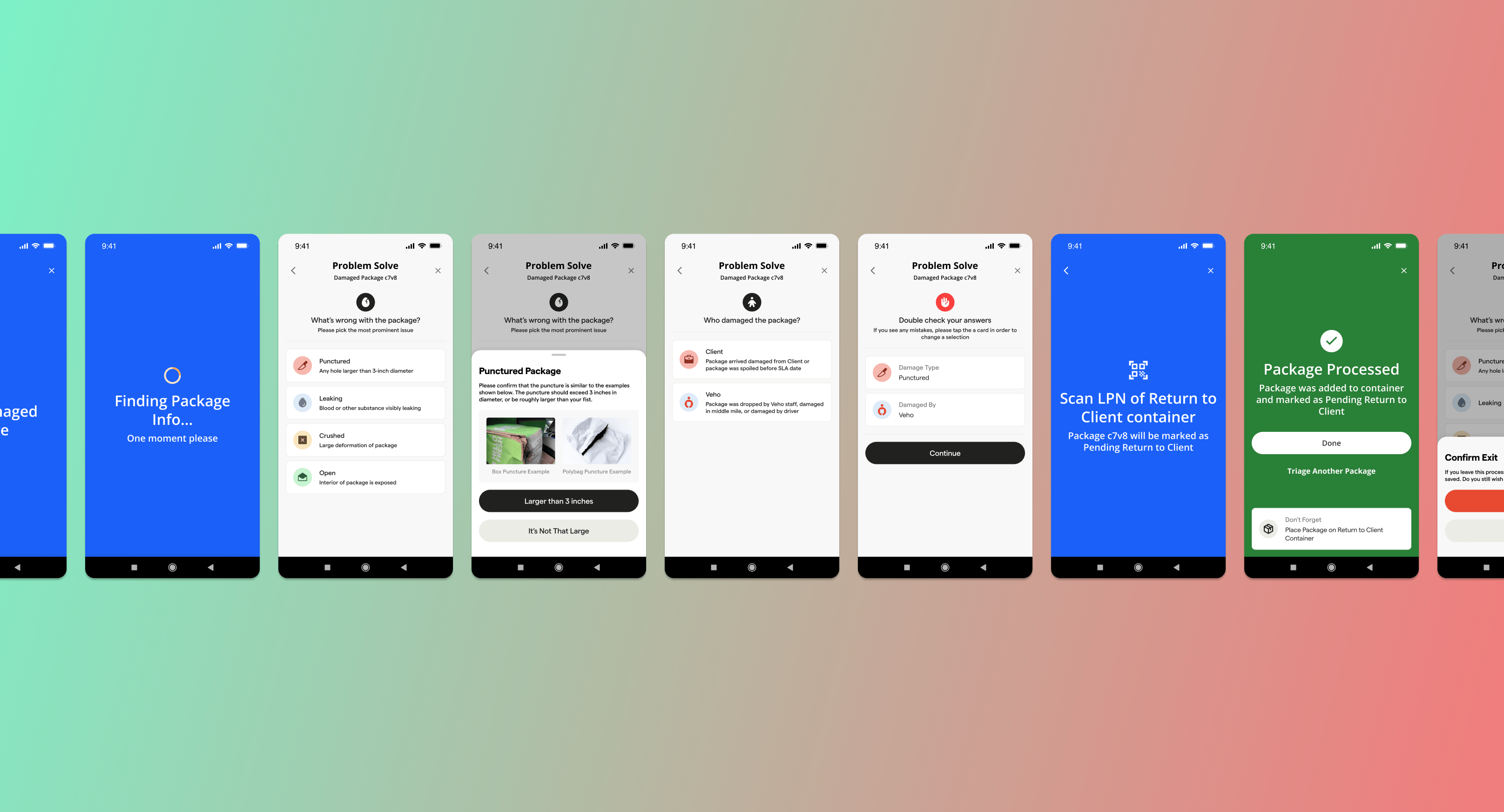
About the project
My first six months at Veho were spent building a comprehensive chain of custody program for Internal Ground Operations. With that foundation in place, the focus shifted to the team's biggest pain point: making package exception handling faster and easier within the facilities app they already relied on.
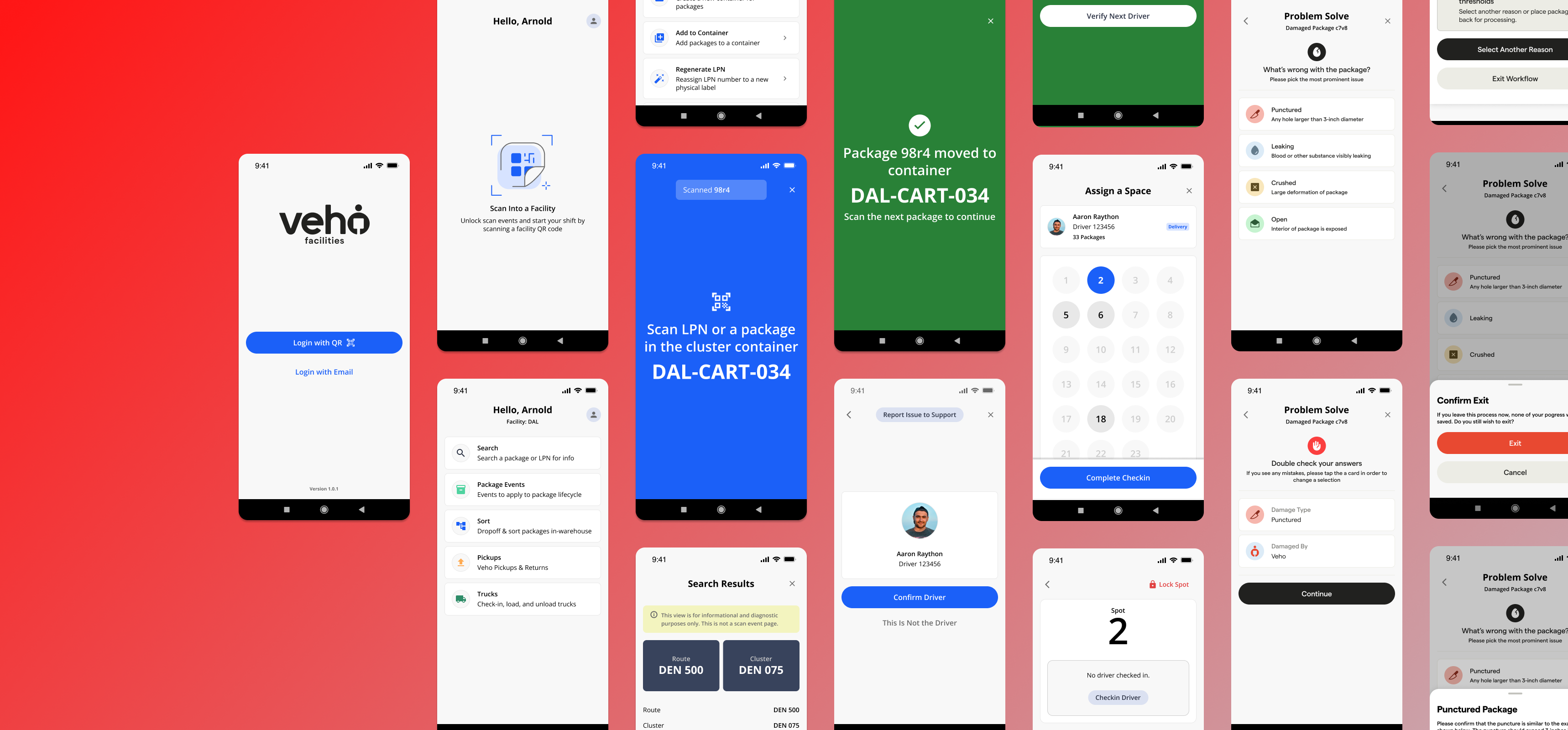
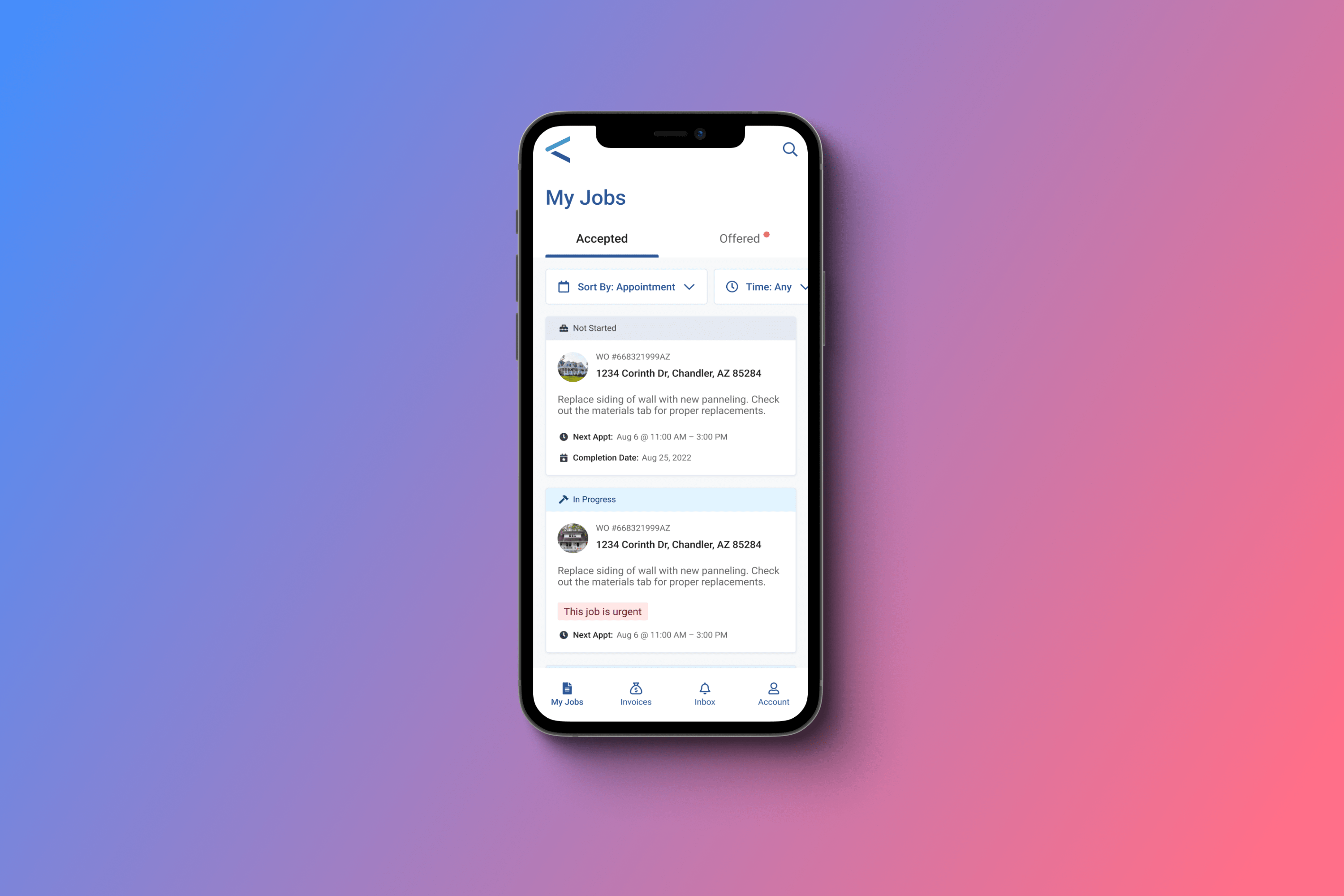
Select screens from the Facilities Mobile App
Broken data at scale
Exception handling at Veho relied on anecdotal information and a manual process that led to return issues with clients. During peak operations (Black Friday through New Year's), Veho hit over 900,000 packages delivered per week. Even at 1% abandoned or returned, that's 9,000 packages needing a return reason, and over 6,000 were being logged as "Access Issues" when that wasn't the case.
The root cause: the default return reason in the app was labeled "Access Issues," making it the path of least resistance. The data was fundamentally broken.
13 manual package events, some with up to 12 sub-reasons. Average triage time: 8 minutes per package, including support notifications, event application, backend updates, and physical handling.

Full exception handling decision tree
Understanding the people
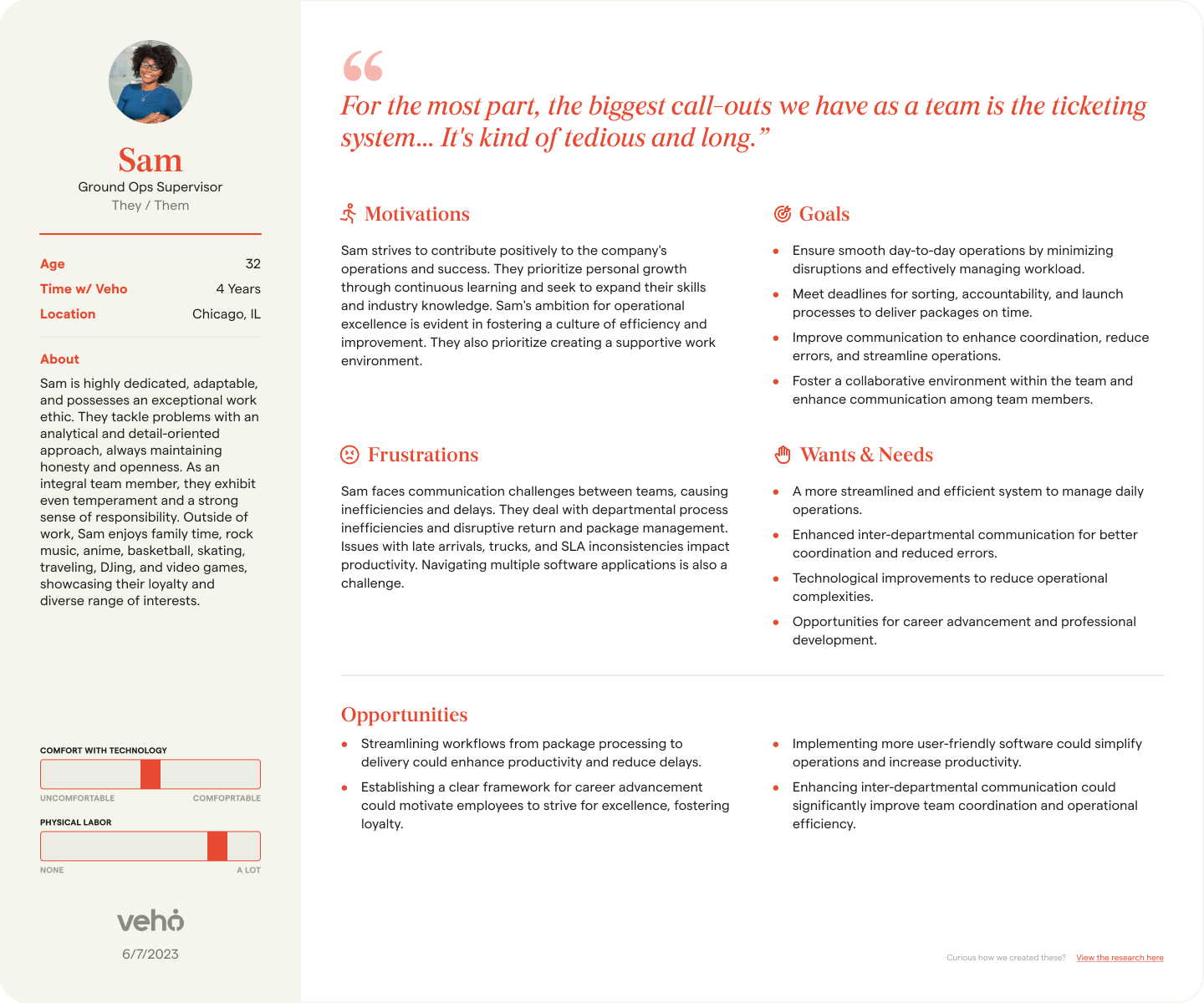
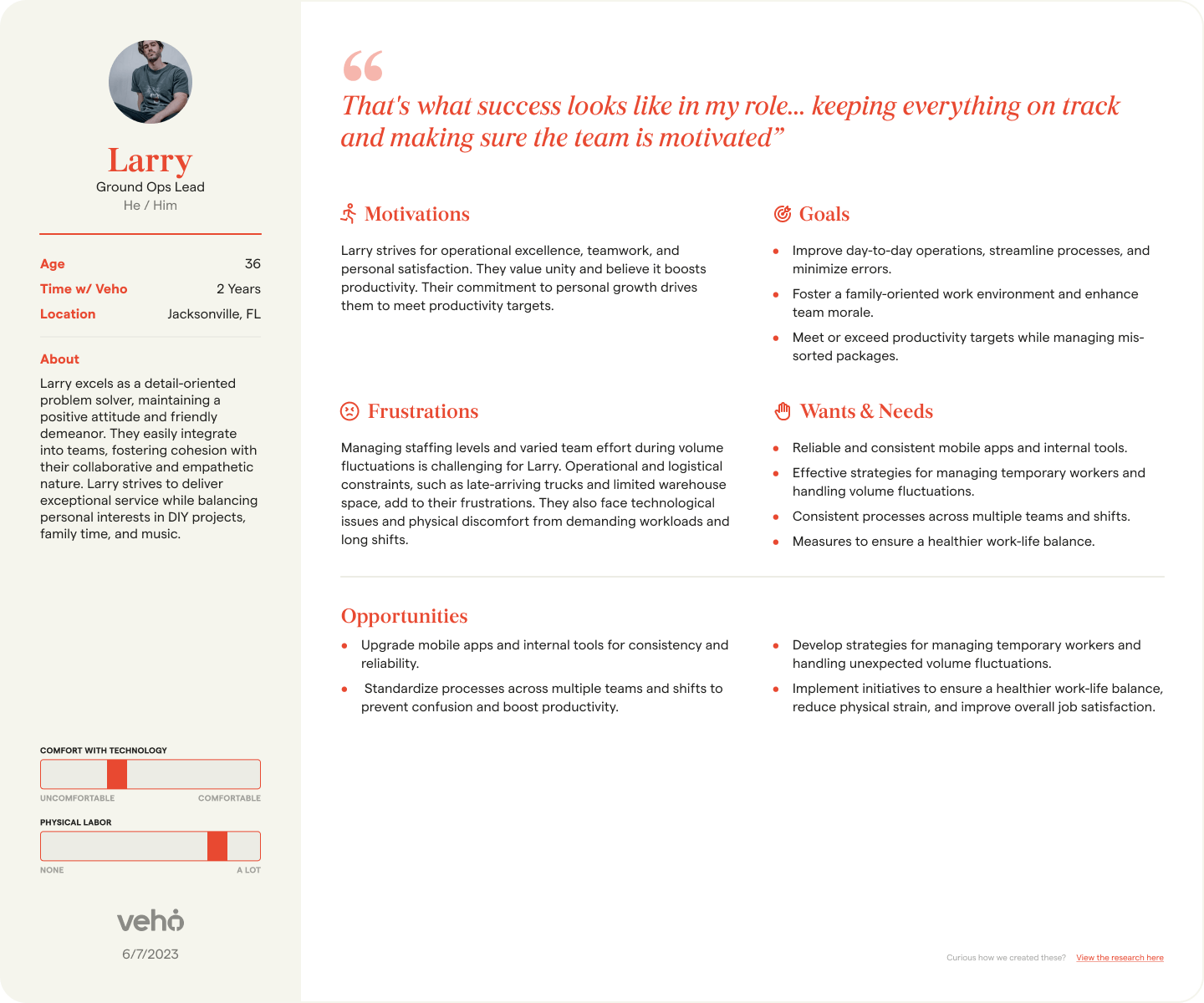
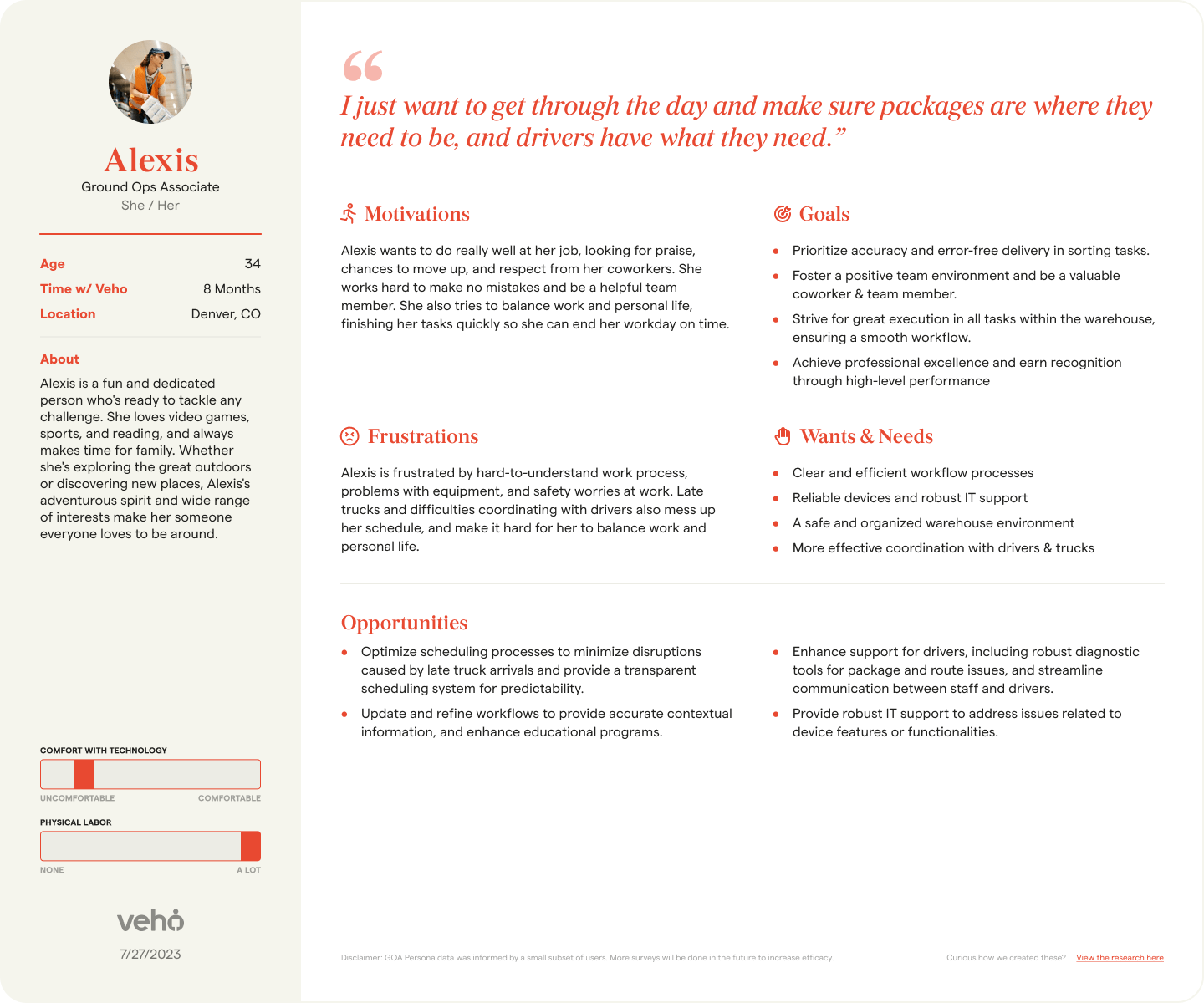
As one of my first large projects at Veho, I conducted interviews with over 20 users across 7 different roles and 7 different markets to create 5 lightweight personas for Ground Operations. For this project, we focused primarily on Supervisor Sam, Larry the Lead, and Alexis the Associate.
From decision tree to wizard
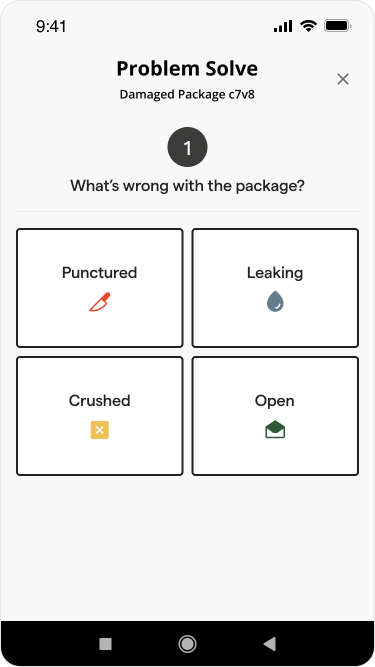
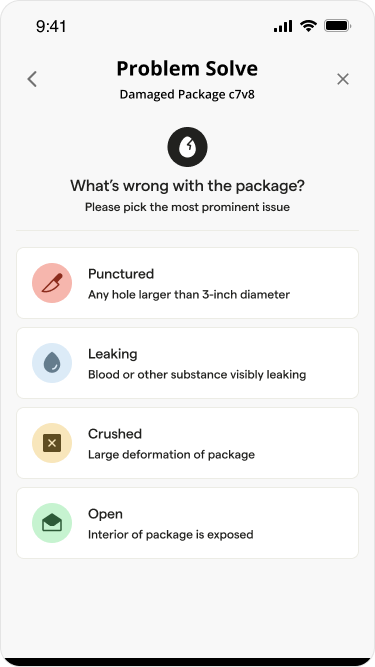
We started with the Damaged Package flow, the most important first iteration since it would need to be built twice: once for packages found damaged by Ground Ops staff, and once for packages returned damaged by drivers. This gave us a scalable framework for all future flows.
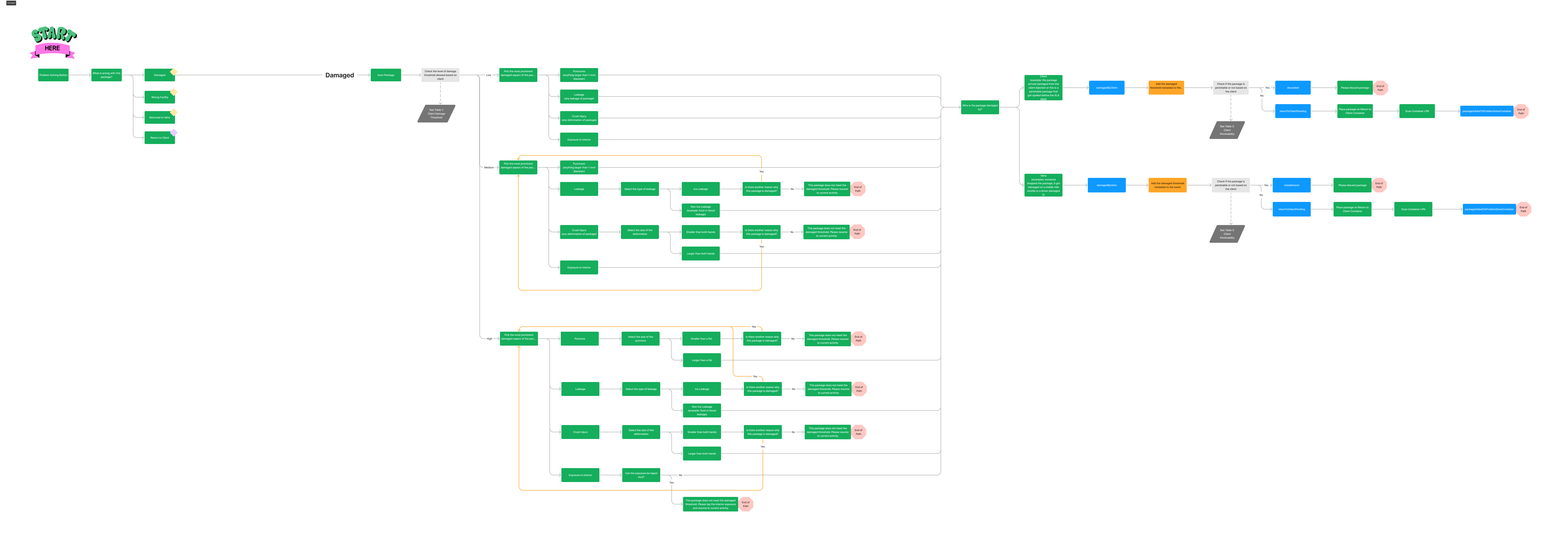
Damaged package decision tree
Working at a startup means moving fast. I had roughly two weeks to get designs vetted by my design team, signed off by stakeholders, and tested with users. The Veho component library gave us a strong foundation, but this was the most complex interaction pattern the FMA had seen, an opportunity to raise the bar.
Selection UI
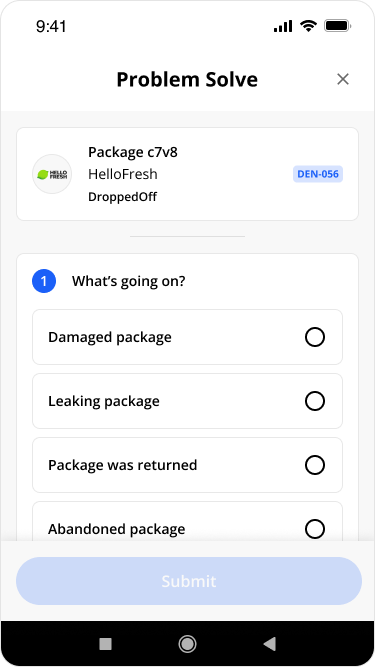
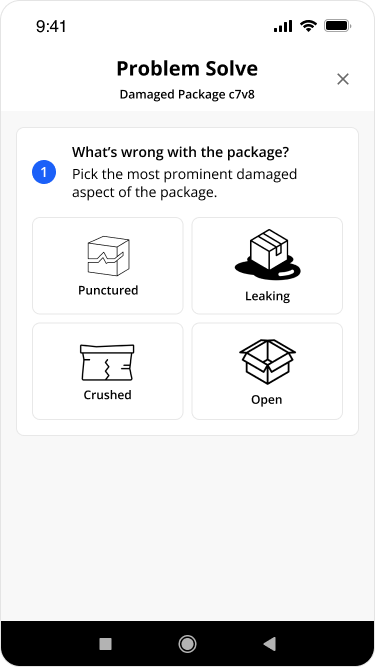
Confirmation UI
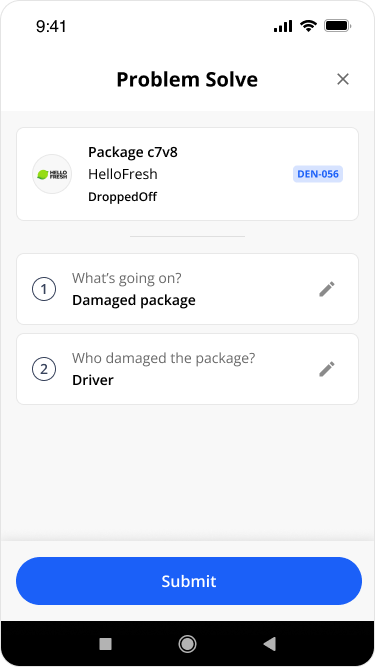
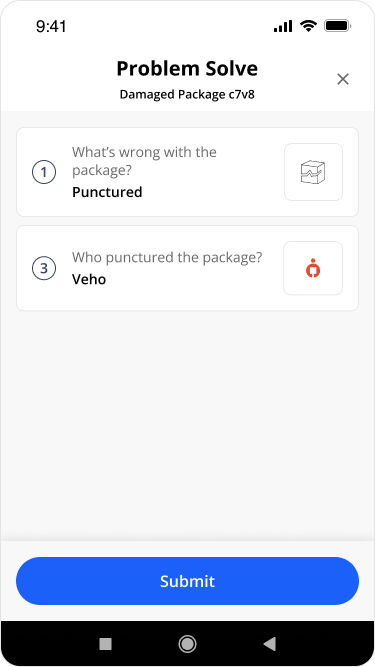
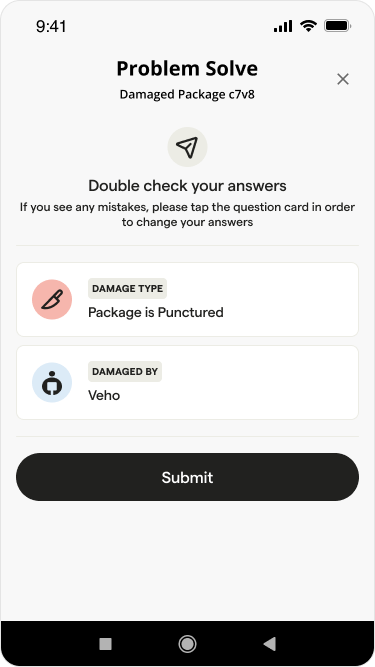
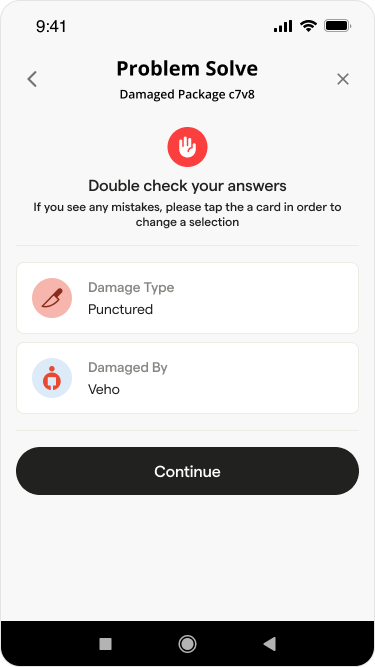
6 moderated interviews with a Figma prototype. Users loved the guided approach: "If the app just told them what to do, that would be a great step in the right direction." Key feedback included: package info could be more prominent, iconography could be toned down, and the entry point was hard to find.
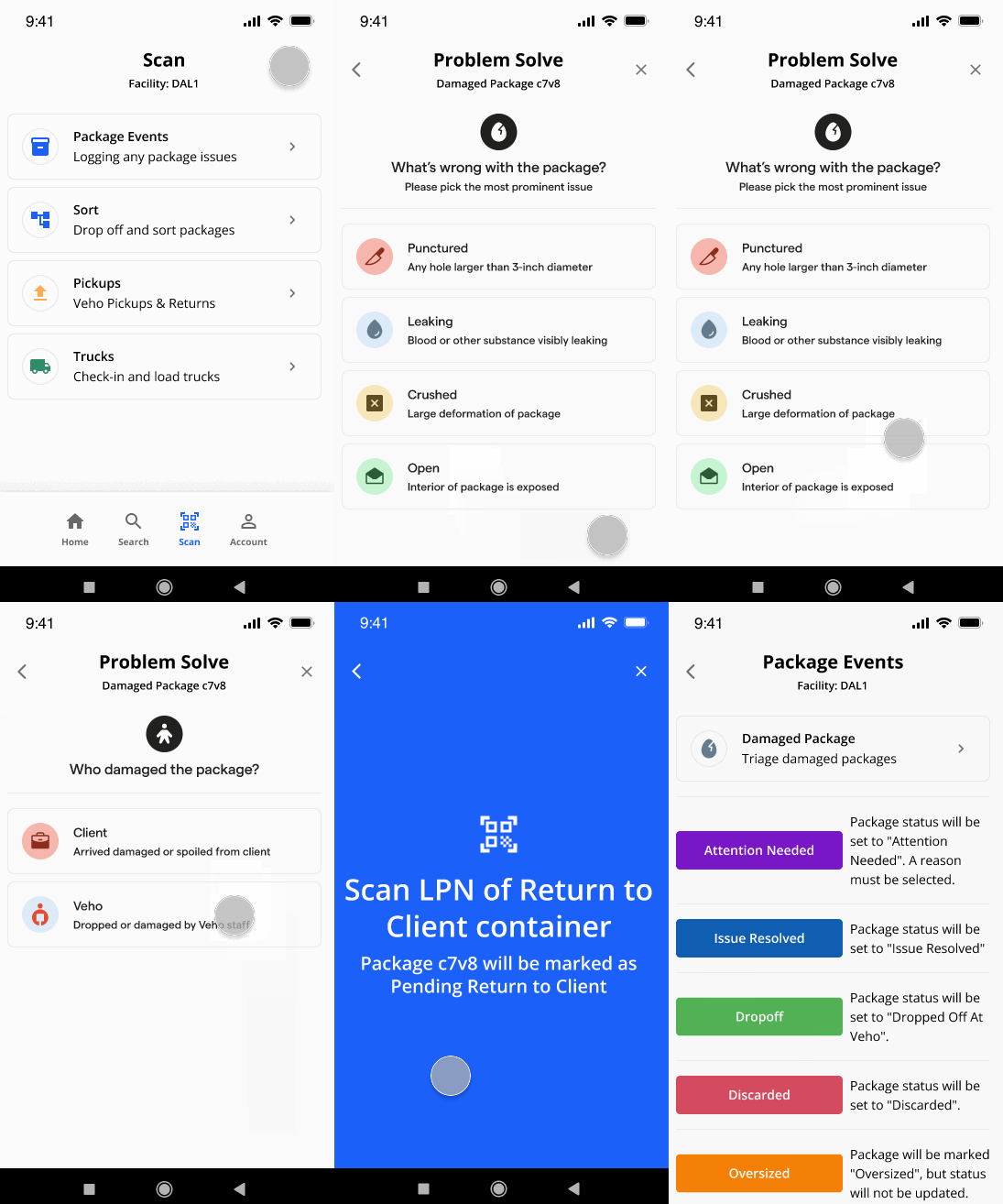
Exception handling wizard flow
Guided by design
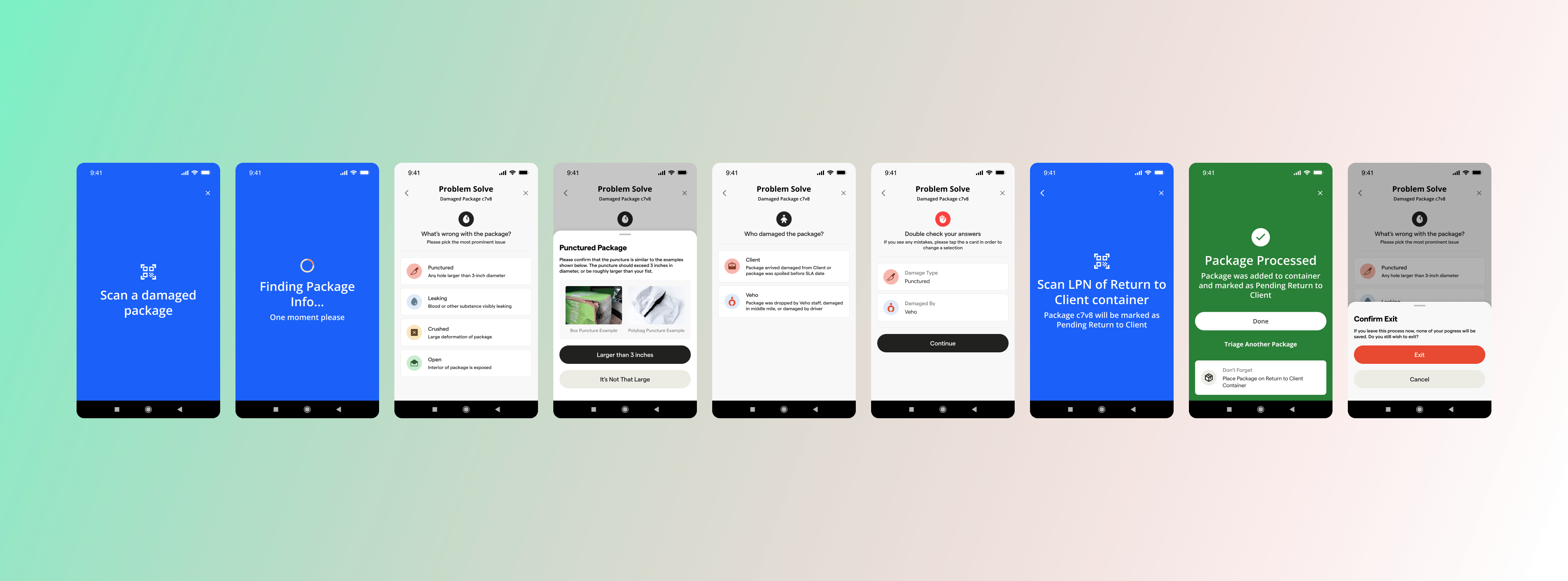
Problem solving workflow – happy path
Measurable impact
What comes next
- Monitor for feedback and surface issues from live warehouse usage
- Build out the next largest flow: Returned to Veho (which also contains the Damaged Package flow)
- Build a dashboard of Problem Solve containers in the Facility Management Console
- Explore more elegant solutions for displaying package info within the wizard
 Lessen
 Trainual