Engaging the disengaged
Imagine being a busy single parent trying to keep up with a child in a fast-paced virtual school, where falling behind by even a week often means not catching back up. Staying on top of grades, teacher contacts, and activity status feels impossible. LoudMouth was built to bridge that gap.
LoudMouth is an intervention and engagement tool that delivers actionable academic data directly to students and parents via text message, early, often, and without requiring them to log into anything. My role spanned research, UX copy, and at one point Product Owner.
Product vision: Loud Mouth seeks to engage the disengaged, reduce clerical work, and humanize the teacher.
Two million messages, zero interfaces
LoudMouth is entirely interface-less: it's a text message facilitator that talks to internal APIs to retrieve student data and deliver it at the moments we found had the greatest impact. Over nearly two years, it sent 2,000,000+ messages to over 50,000 students, parents, and guardians.
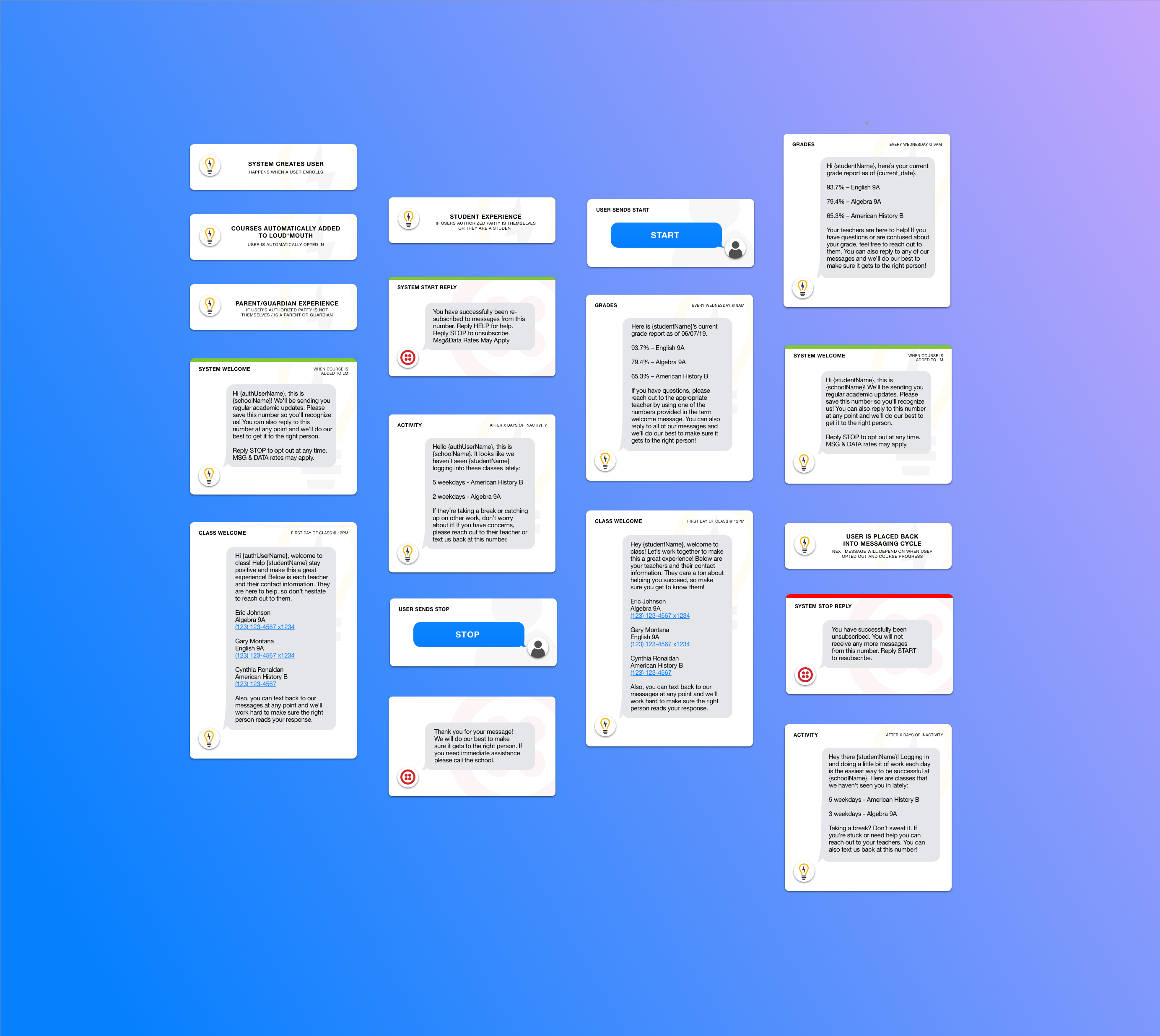
The message cadence was designed around behavior change principles:
- System Welcome: sent at enrollment with opt-out info and expectations
- Class Welcome: first Monday of the term with teacher name, class, and contact info
- Grade Message: every Wednesday morning with current grade data
- Activity Message: sent at customer-defined intervals to flag students falling behind
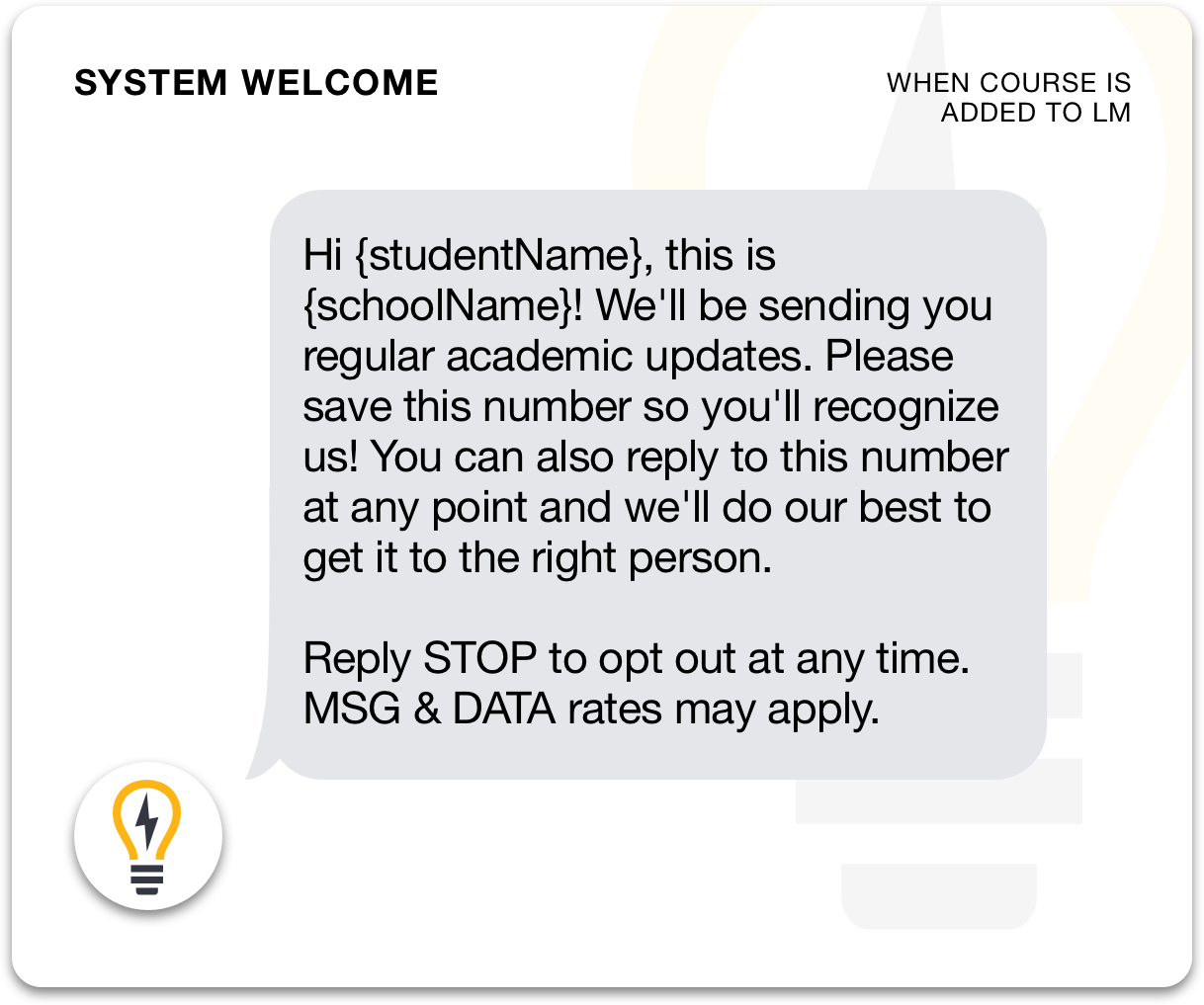
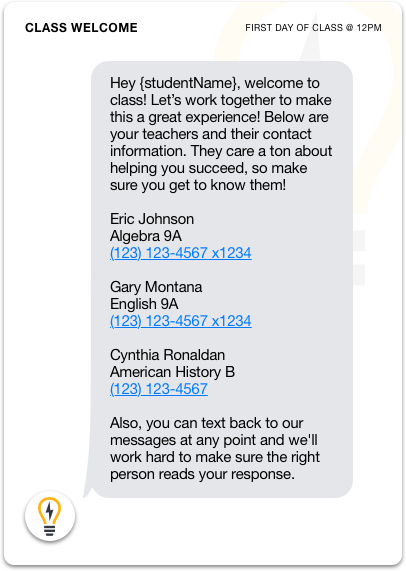
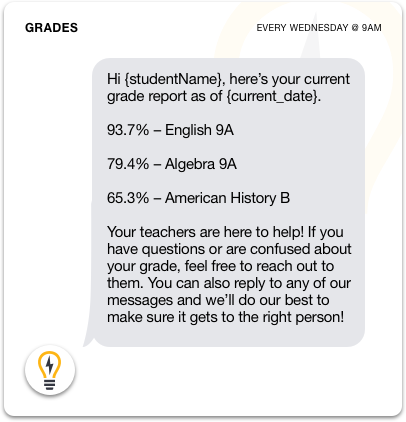
Sample student-facing messages across the LoudMouth cadence
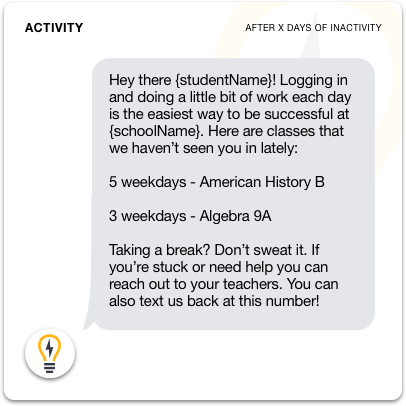
Attendance reminder through LoudMouth
Crowdsourcing clarity with Amazon MTurk
With each of 15+ messaging iterations, we ran studies to validate copy decisions. One persistent confusion: users couldn't tell whether "current overall grade" meant a running average or a final grade. We needed a fast, data-backed answer.
We turned to Amazon Mechanical Turk, sending a short survey with context and multiple-choice interpretations to 229 participants at $0.50 each. The goal was quantitative clarity on a specific verbiage question before committing to another iteration.
The message: "Your student's current overall grade is 86% in Algebra 2A as of 1/4/19 with 22 days left." Which statement best describes it?
- 141: "Your student's current grade in Algebra 2A is 86%." (winning interpretation)
- 55: "Your student's final grade in Algebra 2A is 86."
- 22: "Your student has completed 86% of Algebra 2A."
- 10: None of the above
- 11: Other (assignments, exams)
Removing the word "overall" reduced support calls about this specific confusion by over 70%. A single word change, validated in hours, with measurable impact.
Data for administrators
Beyond the messages themselves, we built a PowerBI dashboard that surfaced response patterns and engagement trends, giving school administrators visibility into how students and parents were interacting with the system.
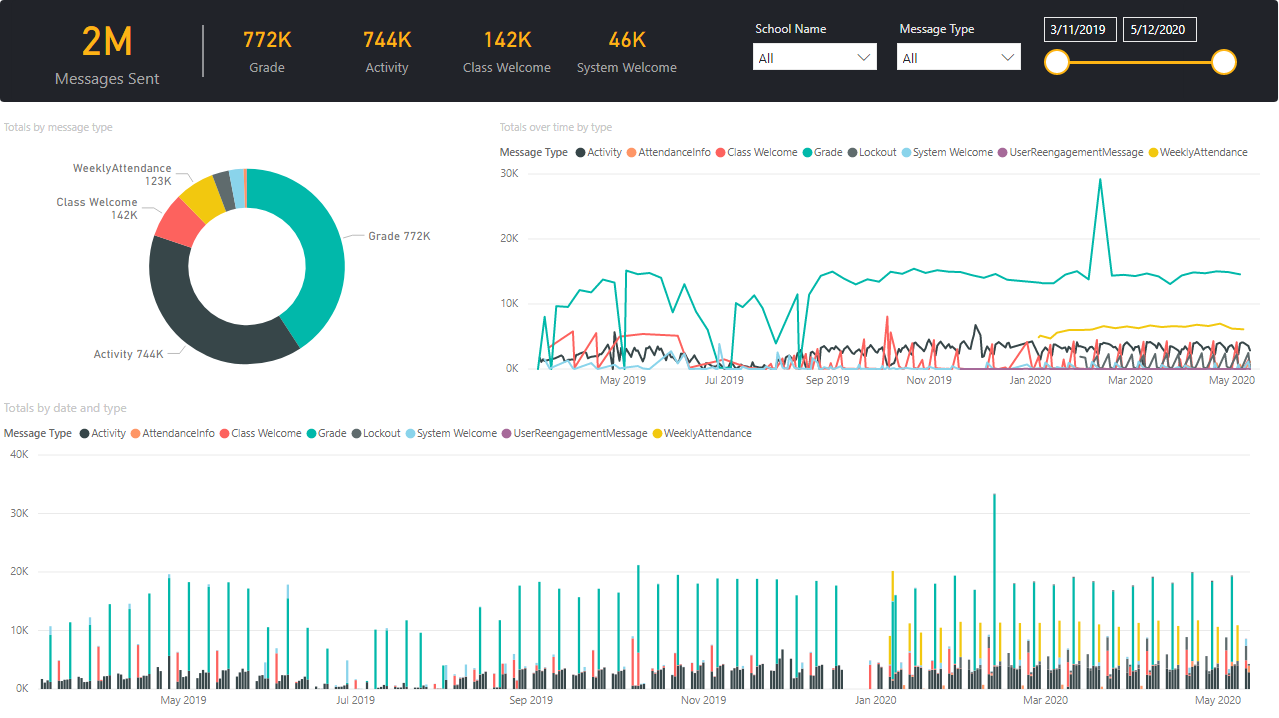
PowerBI dashboard providing engagement insights to administrators
Measurable impact, real students
Within the first four months, clients reported increases in both course completion and seat time with no other obvious influencing factors. The product continues to grow every day.
Clients reported an increase in course completion rates by 5% and seat time by 12% within 4 months of deployment.
What I learned
- 1UX copy is design. A single word can cause consistent confusion at scale, and removing it can have a measurable, trackable impact on support load and user comprehension.
- 2Crowd-sourced validation like MTurk is a powerful tool for copy and metaphor testing when you need quantitative signal fast without setting up formal research sessions.
- 3Interfaceless products still require deep design thinking. The absence of a UI makes the words the entire experience; every character matters.
 Lessen
 Trainual
 StrongMind